Personalized Dementia Care: The Benefits of Small Senior Care Homes
Business Name: BeeHive Homes of Henderson
Address: 1000 Greenway Rd, Henderson, NV 89002
Phone: (702) 551-0265
BeeHive Homes of Henderson
At BeeHive Homes of Henderson, Nevada, we offer the finest assisted living and memory care experience available in a cozy, comfortable homelike setting. Each of our residents has their own spacious room with an ADA approved bathroom and shower. We prepare and serve delicious home-cooked meals three times a day every day. We maintain a small, friendly community of only 20 residents per home. We provide regular activities that our residents find fun and contribute to their health and well-being. Our staff is attentive and caring and provides assistance with daily activities to our residents in a loving and respectful manner. We would like to invite you to tour and experience our memory care & assisted living home and feel the difference.
1000 Greenway Rd, Henderson, NV 89002
Business Hours
Families generally begin checking out dementia care when something specific shakes their self-confidence: a wandering incident in the evening, a range left on, a sudden hospitalization, or a caregiver partner lastly admitting, "I can not keep doing this alone." By the time people look beyond home care, they are exhausted, stressed, and overwhelmed by terminology like assisted living, memory care, respite care, and knowledgeable nursing.
In that swirl of choices, little senior care homes can be easy to miss. They go by many names: residential care homes, board and care, adult family homes, group homes. Whatever the label, the design is basic. Instead of a big facility with lots or hundreds of homeowners, you have a routine home in a neighborhood with maybe 4 to 10 locals and a little staff.
For lots of people dealing with dementia, those smaller settings match the method their brains now process the world: slower, more relational, more dependent on familiar rhythms than on complex schedules or big areas. When succeeded, little homes can provide extremely individualized dementia care in a setting that feels less like a center and more like extended family.
What small senior care homes in fact are
From the outside, a residential care home typically looks like any other single family house on the block. Inside, it is licensed by the state to provide senior care, generally at an assisted living level. That normally consists of help with activities such as bathing, dressing, grooming, medications, and meals.
Regulations differ by state, but essential attributes tend to consist of:
- A limited variety of citizens, generally in between 4 and 10.
- Staff present all the time, frequently with awake over night caregivers.
- Private or semi-private bedrooms, shared common areas, and home-style kitchens.
- A concentrate on daily living instead of a heavy medical model, unless the home is accredited more like a nursing facility.
Many residential care homes specialize further in memory care. That may indicate personnel with additional dementia training, more safe environments to prevent hazardous roaming, and shows adapted to cognitive limitations.
From a licensing perspective, these homes often fall under the exact same umbrella as assisted living, however households experience them extremely in a different way. Rather of a lobby, long corridors, and a large dining-room, you discover a front door, a living room, and a kitchen table.
Why dementia care is various from basic senior care
Good senior care supports physical safety and daily functioning. Great dementia care needs to go further. It must develop surroundings, routines, and relationships that minimize anxiety, assistance maintained abilities, and preserve self-respect in the face of progressive cognitive loss.
Dementia modifications how a person translates sound, area, time, and social hints. What feels slightly annoying to a cognitively healthy older adult can feel overwhelming to somebody with memory loss or impaired judgment. A congested lobby, echoing corridors, or a brand-new employee every week can heighten confusion and agitation.
Three realities regularly shape dementia care:
First, individuals with dementia often lose short-term memory long before long-term memory. That implies they might not remember lunch, but they still acknowledge a long-loved hymn, the smell of cinnamon, or the way their spouse used to fold towels.
Second, they become more sensitive to their environment. Unexpected sounds, cluttered rooms, or complex instructions can trigger distress or withdrawal.
Third, they rely heavily on caretakers to analyze their behavior. A resident who "declines to shower" may really be scared by an extreme spray, not able to understand guidelines, or merely chilled by the bathroom. Caretakers who understand the individual's history and patterns can often reveal the genuine barrier and resolve it without confrontation.
All of this tends to prefer settings where staff can truly be familiar with each resident and where the physical environment is predictable and calm. That is where small senior care homes can shine.
How customization works in a little setting
Personalized dementia care is not a slogan on a pamphlet. It is a series of tiny, repetitive actions that accumulate over days and months. In a little home, those actions are much easier to carry out because the variety of individuals and variables is limited.
Consider morning routines. In large structures with 80 or more residents, personnel frequently work on tight schedules: 10 or 15 individuals to help up, bathed, dressed, and prepared for breakfast within a specified window. Even with caring staff, there is pressure to move quickly. That can feel jarring for a resident with dementia who requires a slower pace and time to process.
In a home with 6 homeowners, staff might have far more versatility. Someone can oversleep because he constantly liked late mornings. Another can shower after breakfast, when she feels more consistent. Rather than a passage of closed doors, personnel can hear when somebody is stirring and adapt in real time.
Meals show the exact same contrast. I have actually walked into big memory care dining rooms where staff tried their best however had 20 homeowners to hint and reroute. Compare that with a house where 2 caretakers prepare breakfast in an open kitchen, know who likes oatmeal thin or thick, and notification early when somebody seems less hungry than usual.
Personalization is not just about preference. It is likewise about medical subtlety. In dementia care, early signs of infection or pain can be simple to miss due to the fact that the person may not recognize or reveal signs plainly. A caretaker who has actually been serving the exact same 5 residents for months is much more most likely to identify a small change in gait, cravings, or sleep patterns.
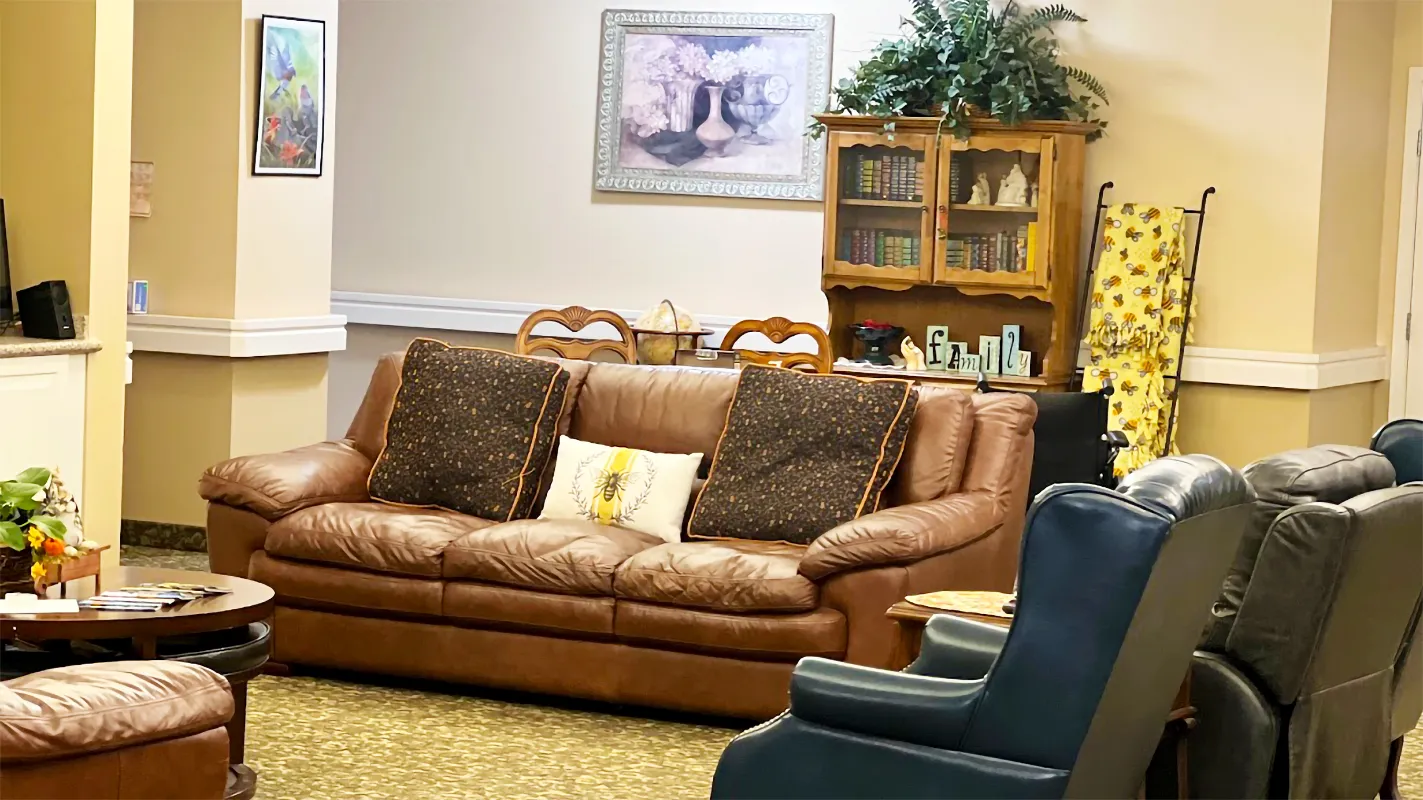
Familiar, human-scale environments lower distress
The size and layout of a setting deeply impact how a person with dementia browses the day. Large centers often provide lots of amenities: activity rooms, cinema, hair salons, several dining options. Those can be wonderful for some citizens, particularly in early stages of cognitive decline.
As dementia progresses, nevertheless, less can really be more. A person battling with memory and orientation normally does better with:
- Shorter distances between bedroom, bathroom, and common areas.
- Clear sightlines, so they can see where to go instead of remember directions.
- Fewer decision points, such as which corridor or elevator to use.
A small senior care home naturally offers this kind of human-scale environment. You leave of your bed room and within a couple of actions you can see the living-room, the kitchen, and the nearest restroom. Rather of browsing floors and wings, you browse an easy house.
Noise levels matter too. In a structure with 60 citizens, even a reasonably calm day creates a great deal of sensory input: Televisions, intercoms, cleaning devices, phone calls at the front desk, visitors coming and going. In a home with 6 locals, the background noise might be meals in the sink, a radio at low volume, or peaceful conversation at the table.
For someone with dementia, that distinction can be the line in between constant low-level agitation and tolerable, predictable stimulation.
Relationships: depth rather than scale
The advantage of little homes is not simply fewer people. It is the opportunity for longer, deeper relationships in between citizens, staff, and families.
In large memory care or assisted living settings, staffing patterns and turnover can make it hard for households to even understand who is supplying most of the hands-on care. You might acknowledge the nurse or the lead assistant, however the rotating shifts mean your parent connects with lots of staff over time.
In a residential care home, the core caregiving group may be fewer than 10 individuals overall, including part-time staff. Family members quickly discover who is on early mornings, who manages nights, who braids hair on Sundays, who loves to sing with residents. That familiarity builds rely on both directions.
I have seen households deeply associated with little homes: bringing in special recipes, showing staff how Dad used to shave with his safety razor, sharing favorite songs, even helping personnel learn a couple of words of a resident's native language. Those personal details enter into the care plan, not just side notes.
For the resident with dementia, the pay-off is a stable cast of characters. Deals with repeat, voices are identifiable, and personnel know how to analyze everyone's methods of expressing requirements. A resident who frowns and moves his collar may be too warm. Another might be communicating discomfort. In a home with a handful of locals, staff can carry those psychological maps and fine-tune them over months and years.
Clinical safety in a non-institutional setting
Families in some cases stress that a little home can not manage complex dementia care needs safely. The reality is nuanced and depends upon great licensing, training, and clinical oversight.
Most little homes that focus on memory care deal:
- 24/ 7 staff existence, frequently with awake overnight caregivers.
- Medication administration, either by experienced caretakers or licensed nurses, depending upon state rules.
- Support with incontinence, movement, feeding, and bathing.
- Coordination with outside providers such as doctors, home health, hospice, and physical therapy.
For lots of people dealing with dementia, these capabilities suffice for the majority of their illness course. In reality, small homes typically handle greater acuity on the individual care side than numerous traditional assisted living neighborhoods, which sometimes have staffing ratios that make extremely hands-on care difficult.
The concern is not whether a small home is "medical enough," but how it gets in touch with medical companies. Some of the very best setups I have actually seen include:
- A going to nurse professional who rounds regularly, reviews medications, and tracks chronic conditions.
- Established relationships with specific home health and hospice agencies.
- Clear procedures for falls, behavioral changes, and signs of infection.
- Direct phone gain access to for families to talk with the owner or care coordinator.
There are edge cases. Somebody on a ventilator, with unstable feeding tubes, or with complex wound care typically needs a competent nursing facility. The same goes for locals with extremely unpredictable aggressiveness that threatens security in a little environment. Good operators acknowledge those limitations early and assist households plan shifts when needed.
Comparing large neighborhoods with small homes
Both conventional memory care communities and little residential care homes have a location in dementia care. The best option depends upon the individual's phase of illness, character, and family situation.
Here is a short, simplified comparison that families often discover helpful:
-
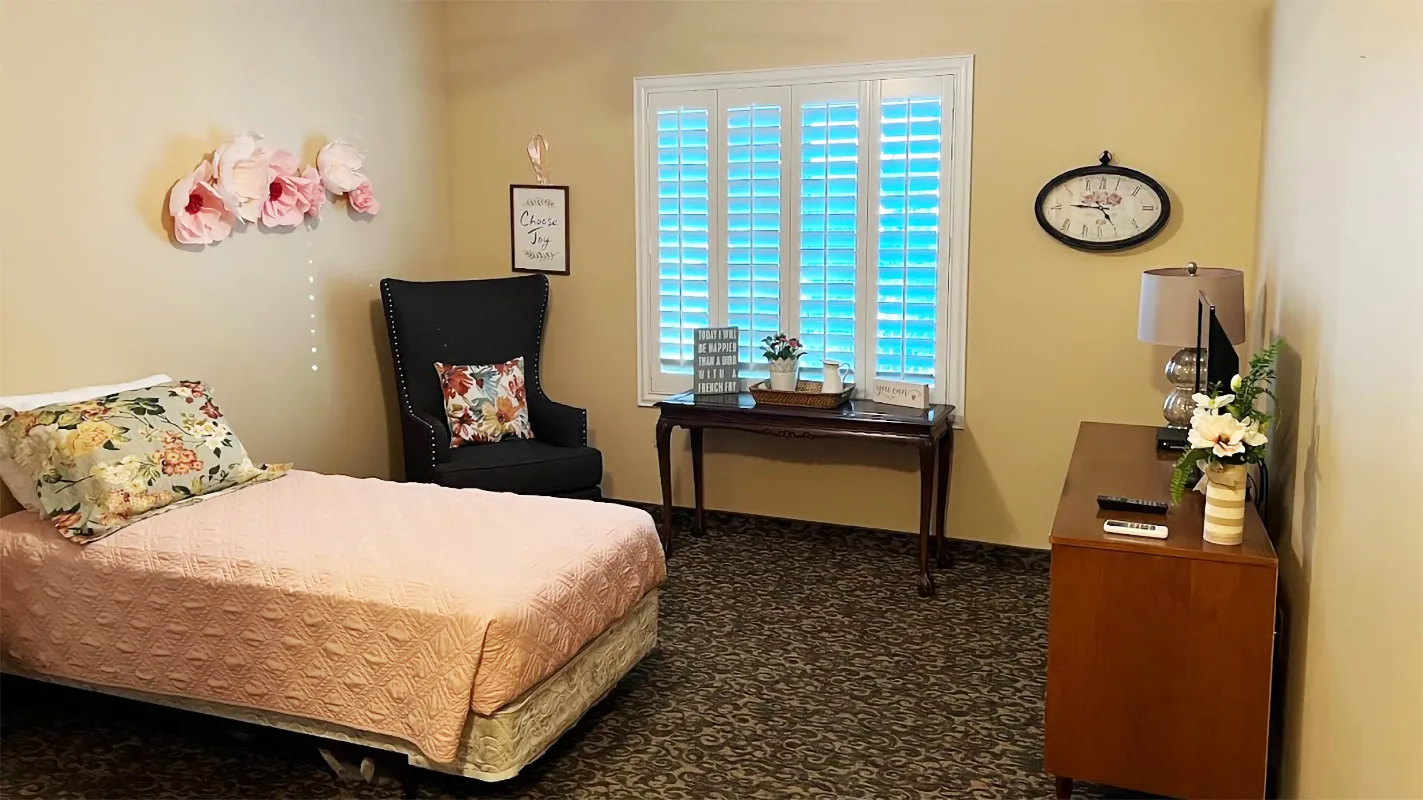
Environment. Large neighborhoods use more features and activity spaces, but they can feel hectic, with long corridors and more transitions. Little homes feel familiar and compact, with fewer "moving parts" to navigate.
-
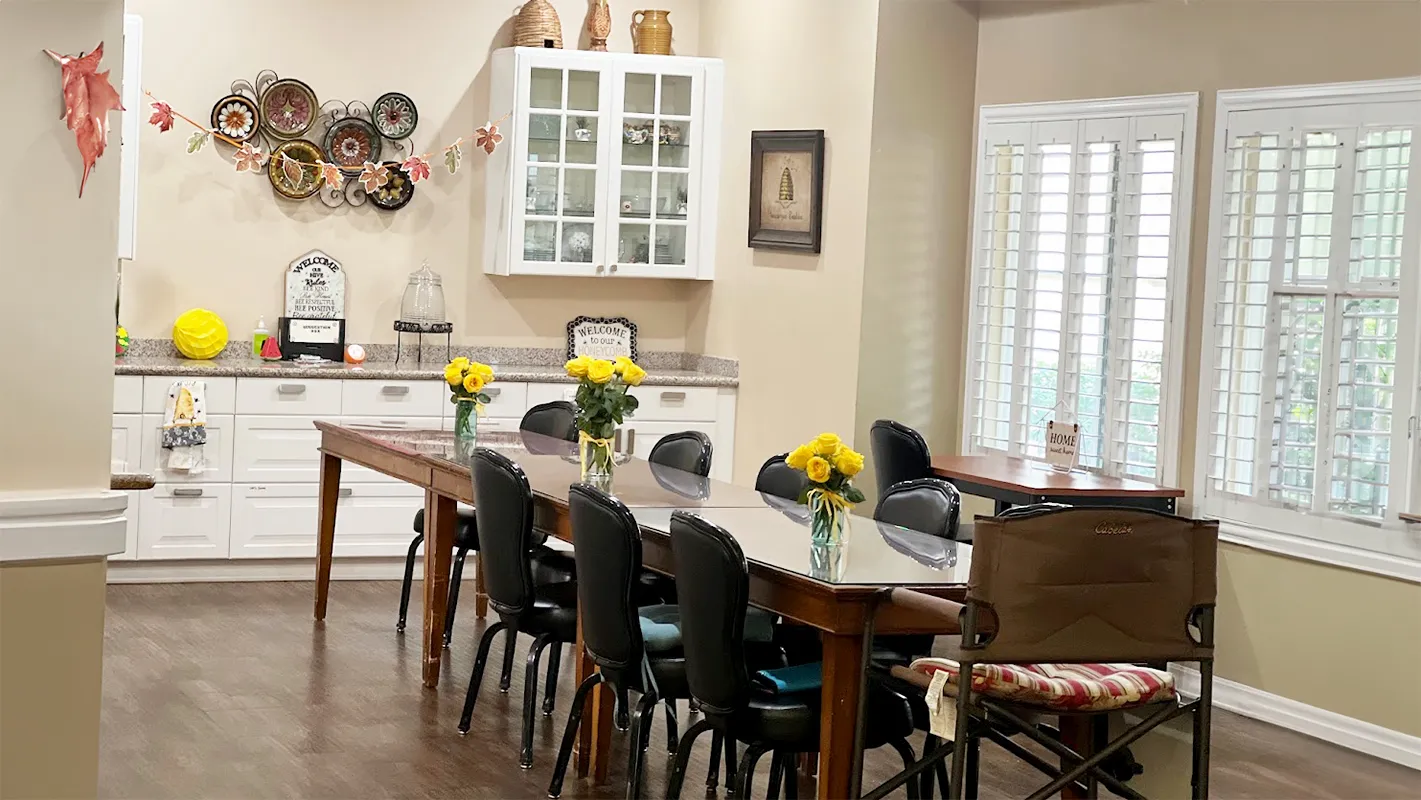
Social life. Bigger settings can offer group activities, clubs, and broader social circles, especially useful for individuals in earlier phases who enjoy variety. Small homes normally foster quieter, more intimate interactions and may be better matched to people who were never ever "group activity" people.
-
Staffing patterns. In large communities, there may be on-site nurses and more layers of management, but direct caretakers often cover bigger ratios. In little homes, ratios are typically lower, and the very same staff engage with the same residents daily, though there may be less clinical staff on site.
-
Flexibility. Huge organizations often have rigorous schedules for meals, bathing, and activities to collaborate many residents. Little homes can typically adjust routines to specific sleep patterns, choices, and state of minds, particularly handy for individuals with dementia who do finest when the day bends to their internal rhythms.
-
Cost and transparency. Costs vary widely. Some large neighborhoods charge lower base rates but include considerable charges as care requirements increase. Lots of little homes use more inclusive pricing or easier tiered designs. Due to the fact that the setting is smaller, households often feel they can see more plainly what they are paying for.
Neither design is inherently better. The fit depends on the individual. I have actually seen extroverted former instructors grow in big memory care programs filled with discussion and structured activities. I have actually likewise seen shy engineers unwind noticeably once moved from a big structure to a quiet home with one TV and a garden.
Where respite care fits in
Family caregivers sometimes feel that picking a long-term senior care option is all-or-nothing. In reality, respite care stays can be a crucial bridge, specifically when you are checking out little homes.
Respite care is short-term, normally from a couple of days as much as a month or two. Some little senior care homes keep one space offered for respite. Others convert an open permanent bed into a respite opportunity in between long-lasting residents.
Short stays can help in several ways:
They give the person with dementia an opportunity to try a brand-new environment without the psychological weight of "this is forever." Families often discover that the shift goes much better than expected in a small, home-like setting.
They provide much-needed rest for spouses or adult children who are nearing burnout but not prepared to devote to permanent placement.
They use a real-world test. You see how staff deal with nighttime roaming, personal care, and communication. You can observe meals, hygiene, and state of mind changes throughout numerous days instead of a single tour.
If you are seriously thinking about a little home for long-term dementia care, inquiring about respite options is wise, even if you do not use them right away.
Trade-offs and limitations of small senior care homes
No setting is perfect. Little homes included genuine trade-offs that should have clear-eyed discussion.
One restriction is staffing depth. In a house with 6 locals, if one caretaker calls out sick, there is less redundancy than in a 100-bed facility. Excellent operators prepare for this with backup personnel and on-call systems, however households ought to still ask specific concerns about coverage.
Another is facilities. If your loved one truly delights in senior care BeeHive Homes of Henderson orderly activities, on-site treatment health clubs, or a buzzing social environment, a small home may feel too peaceful. Some homes bring in going to musicians, animal therapy, or workout trainers, however the scale is smaller.
Regulation and oversight differ by state. While a lot of jurisdictions certify residential care homes, the intensity of evaluations and reporting can differ from what you see in bigger senior care settings. This makes it specifically important to visit regularly, view carefully, and trust your observations.
Lastly, location can be a compromise. Numerous small homes remain in residential neighborhoods that might be farther from significant medical facilities or from where family members live. For some families, regular checking out outweighs other elements, leading them toward bigger facilities better to home.
Good decision-making indicates weighing these truths against the advantages of customization, environment, and relationship-based care.
What to search for when exploring a little dementia care home
Choosing any senior care setting is part fact-finding, part gut instinct. With little homes, the "feel" of the location is especially considerable, due to the fact that the environment is intimate and your loved one will be sharing a living-room and cooking area with a handful of people.
Here is a succinct checklist numerous households discover practical when visiting small homes:
- Listen and sniff at the front door. A faint smell of lunch is typical. Strong odors of urine, bleach, or heavy air freshener are warning signs.
- Watch staff-resident interactions for at least 20 minutes. Do individuals speak respectfully, utilize citizens' names, and make eye contact, or do they talk over them?
- Ask specific concerns about dementia training. General "we have experience" is insufficient. Try to find official training hours, ongoing education, and examples of how they handle agitation or sundowning.
- Observe whether locals look groomed, properly dressed, and engaged at their own level, whether that indicates chatting, listening to music, or just sitting comfortably.
- Clarify medical and behavioral limits. Ask clearly what type of needs would set off a recommendation to move to a greater level of care, such as serious aggressiveness, frequent hospitalizations, or feeding tubes.
Do not rush. Visit at various times if you can, consisting of nights or weekends. If the home seems perfect on paper but you feel uneasy after two visits, honor that impulse and keep looking.
Supporting dignity and identity through the little things
Dementia slowly strips away apparent markers of independence. Driving, handling money, cooking, and intricate decision-making fall away. Yet within those losses stays a person with lifelong habits, choices, and values.
Small senior care homes are distinctively positioned to secure that inner identity through small acts that would be difficult to sustain at scale. I have seen:
A retired farmer in a residential care home who spent mornings "examining the fence," which in useful terms implied strolling the yard perimeter with an employee. That ten-minute ritual, built into his everyday routine, relieved his restlessness and honored his sense of responsibility.
A previous choir singer whose caregiver placed on old hymn recordings every Sunday morning and invited her to "help lead." Her words were garbled by that point, but the light in her eyes was unmistakable.
A female who always prided herself on hospitality. Personnel gave her a function "setting the table" for meals with brilliantly colored, solid dishes. Tasks were adjusted for safety, but the role was real.
Those moments are not bonus. For someone living with dementia, they are the core of good care. Small homes, with closer staff-resident ratios and less rigid schedules, can weave such rituals into daily life more quickly than big institutions.
When a larger setting might be the better fit
It is necessary to acknowledge that little is not always better. Some individuals and households will be well served by bigger assisted living or memory care communities.
You may lean toward a bigger setting if:
Your loved one is in the earlier stages of dementia, still extremely social, and flourishes on structured activities, trips, and range. Bigger neighborhoods typically offer more programs choices each day.
The person has substantial medical needs finest monitored by on-site nursing or immediate access to a wider medical group, such as frequent IV medications or really complex persistent illness management.
Your family requires or values distance above all else. If the only little homes are an hour away, but a good memory care community is 10 minutes from your house, the capability to visit a number of times a week may surpass other factors.
You anticipate that your loved one may need a greater level of care quickly, and you want to avoid another move. Some larger organizations offer a continuum from assisted living to memory care to experienced nursing, which can simplify future transitions.
The decision is hardly ever clean-cut. Many families ultimately pick a little residential care home, then later on shift to a nursing facility when dementia is extremely innovative and medical complexity dominates. That is not a failure. It is an adjustment to altering needs.
Bringing it back to what matters most
Words like assisted living, memory care, respite care, and senior care can make choices feel abstract, as if you are selecting in between service packages. Beneath the labels lies a human truth: someone you enjoy, living with a brain disease that is slowly altering who they appear to be on the outdoors, even as their core self remains.
Small senior care homes will not reverse dementia or eliminate its hardest days. What they can typically do, when well run, is make life more gentle:
Fewer complete strangers at the bedside. More familiar faces in the kitchen.
Less strolling down long hallways questioning where you are. More being in a living room where you slowly know every corner.
Fewer rushed showers at scheduled times. More opportunities to follow your own rhythm.
Behind the guidelines and organization designs, that is what families are actually looking for: a location where their loved one with dementia can still be known as an individual, not a room number. Small senior care homes, with their focus on tailored relationships and human-scale living, are one of the most powerful tools we have to make that possible.
BeeHive Homes of Henderson provides assisted living care
BeeHive Homes of Henderson provides memory care services
BeeHive Homes of Henderson provides respite care services
BeeHive Homes of Henderson supports assistance with bathing and grooming
BeeHive Homes of Henderson offers private bedrooms with private bathrooms
BeeHive Homes of Henderson provides medication monitoring and documentation
BeeHive Homes of Henderson serves dietitian-approved meals
BeeHive Homes of Henderson provides housekeeping services
BeeHive Homes of Henderson provides laundry services
BeeHive Homes of Henderson offers community dining and social engagement activities
BeeHive Homes of Henderson features life enrichment activities
BeeHive Homes of Henderson supports personal care assistance during meals and daily routines
BeeHive Homes of Henderson promotes frequent physical and mental exercise opportunities
BeeHive Homes of Henderson provides a home-like residential environment
BeeHive Homes of Henderson creates customized care plans as residents’ needs change
BeeHive Homes of Henderson assesses individual resident care needs
BeeHive Homes of Henderson accepts private pay and long-term care insurance
BeeHive Homes of Henderson assists qualified veterans with Aid and Attendance benefits
BeeHive Homes of Henderson encourages meaningful resident-to-staff relationships
BeeHive Homes of Henderson delivers compassionate, attentive senior care focused on dignity and comfort
BeeHive Homes of Henderson has a phone number of (702) 551-0265
BeeHive Homes of Henderson has an address of 1000 Greenway Rd, Henderson, NV 89002
BeeHive Homes of Henderson has a website https://beehivehomes.com/locations/henderson/
BeeHive Homes of Henderson has Google Maps listing https://maps.app.goo.gl/qpZ3TKgbxCu1MVSh8
BeeHive Homes of Henderson has Instagram page https://www.instagram.com/beehivehomeshenderson/
BeeHive Homes of Henderson has an YouTube page https://www.youtube.com/@hamiltonshives4468
BeeHive Homes of Henderson won Top Assisted Living Homes 2025
BeeHive Homes of Henderson earned Best Customer Service Award 2024
BeeHive Homes of Henderson placed 1st for Senior Living Communities 2025
People Also Ask about BeeHive Homes of Henderson
What is BeeHive Homes of Henderson Living monthly room rate?
Our base rate is $4,700 per month for assisted living and $5,700 per month for memory care plus a one-time community fee of $2,500. We do an assessment of each resident's needs prior to move-in, so each resident's rate may be higher. These prices fall into three tiers based on resident needs and range from $4,700/month to $7,300/month. However, after we do the assessment and quote a price, there are no add-ons or hidden fees
Does Medicare and Medicaid pay for a stay at Bee Hive Homes?
Medicare pays for hospital and nursing home stays, but does not pay for assisted living. Some assisted living facilities are Medicaid providers but we are not. We do accept private pay, long-term care insurance, and we can assist qualified Veterans with approval for the Aid and Attendance program
Do we have a nurse on staff?
We do have a nurse on contract who is available as a resource to our staff but our residents' needs do not require a nurse on-site. We always have trained caregivers in the home and awake around the clock
What can you tell me about the food at Bee Hive?
You have to smell it and taste it to believe it! We use dietitian-approved meals with alternates available for flexibility, and we can accommodate needs for different textures and therapeutic diets. We have found that most physicians are happy to relax diet restrictions without any negative effect on our residents
Do we allow pets?
We do allow small pets as long as the resident is able to care for them. State regulations also require that we have evidence of current immunizations for any required shots
Where is BeeHive Homes of Henderson located?
BeeHive Homes of Henderson is conveniently located at 1000 Greenway Rd, Henderson, NV 89002. You can easily find directions on Google Maps or call at (702) 551-0265 Monday through Sunday 9:00am to 5:00pm
How can I contact BeeHive Homes of Henderson?
You can contact BeeHive Homes of Henderson by phone at: (702) 551-0265, visit their website at https://beehivehomes.com/locations/henderson/ or connect on social media via Instagram or Facebook
Black Mountain Griddle provides a welcoming breakfast and lunch destination where families connected with Assisted living memory care senior care elderly care and respite care can enjoy a meal together.